
Why Your Windshield Gets Hazy in Winter (And How Professional Detailing Fixes It)

If your windshield looks foggy, streaky, or constantly hazy during Missouri winters, you are not imagining things. Many drivers in Washington, Union, and Pacific assume the problem is just cold air, condensation, or worn wiper blades. In reality, winter haze is usually caused by a buildup of interior and exterior contamination that standard cleaning methods never fully remove.
Winter conditions create the perfect environment for residue to collect on glass. Once that film builds up, visibility suffers, glare increases, and defrosting becomes less effective. This article explains why winter windshield haze happens, why it gets worse in cold weather, and how professional detailing restores clear, streak-free glass.
Winter Makes Windshield Film Build Faster
Windshields are exposed to more contamination in winter than at any other time of year.
Missouri winter driving coats glass with:
- Road brine and salt mist
- Slush spray from traffic
- Diesel exhaust residue
- Washer fluid residue
- Dirt and gravel dust
- Interior off-gassing from plastics
- Moisture trapped inside the cabin
Each layer is thin, but together they form a stubborn film that resists normal glass cleaning.
Interior Film Is a Major Cause of Winter Haze
Many drivers focus only on the outside of the windshield. In winter, the inside is often the bigger problem.
Interior haze forms when:
- Plastics and vinyl release oils
- Dashboard dressings evaporate
- Heater air circulates contaminants
- Moisture condenses on cold glass
- Smoke or food vapors linger
When warm air hits cold glass, these oils stick instantly, creating a greasy film that smears instead of wiping clean.
Why Winter Defrosting Makes the Problem Worse
Defrosters remove moisture but also accelerate film buildup.
As the heater runs:
- Warm air pulls oils from the dashboard
- Vapors rise toward the windshield
- Condensation traps residue
- Repeated heating bakes film onto the glass
Over time, the windshield becomes increasingly difficult to clean with household products.
Exterior Winter Contamination Reduces Clarity
On the outside, winter contamination behaves differently than summer dirt.
Road brine dries into a translucent layer that:
- Diffuses light
- Causes headlight glare
- Smears when wiped
- Reduces night visibility
- Makes streaks reappear quickly
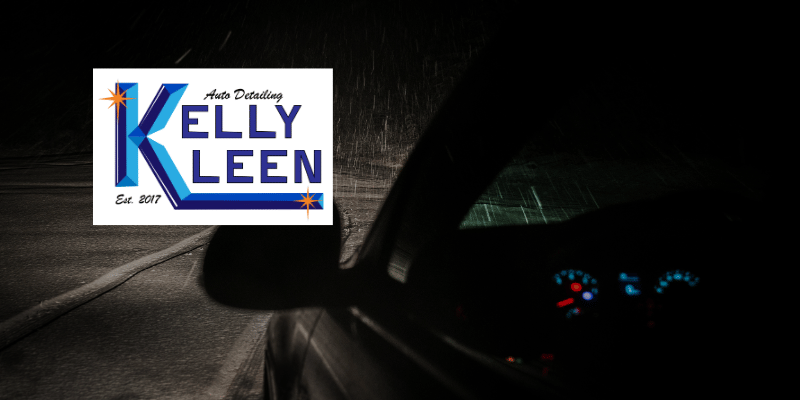
Even when the windshield looks clean during the day, glare becomes obvious at night or during rain.
Wiper Blades Are Often Blamed Incorrectly
Wiper blades do wear out in winter, but they are rarely the root cause of haze.
When blades streak:
- They are dragging film across glass
- Brine residue smears instead of rinsing
- Oils prevent clean contact
- Microscopic debris scratches the surface
Replacing blades without removing the film only masks the issue temporarily.
Why Household Glass Cleaners Fail in Winter
Standard glass cleaners are designed for fingerprints and light dirt, not winter contamination.
They struggle because:
- They do not cut through oily residue
- They leave behind surfactants
- They smear interior film
- They cannot remove bonded minerals
- They fail on cold glass surfaces
This leads to frustration and constant re-cleaning with no lasting improvement.
How Professional Detailing Restores Clear Glass
Professional glass care goes far beyond spraying and wiping.
Kelly Kleen’s process targets both sides of the windshield and removes the film at its source.
Step 1: Deep Glass Cleaning
Specialized cleaners dissolve oils, plastics residue, and winter grime without smearing.
Step 2: Mechanical Decontamination
Light polishing or glass-safe abrasion removes bonded residue that chemicals alone cannot lift.
Step 3: Edge and Seal Cleaning
Residue builds up along edges and seals, where it re-spreads across the glass if not removed.
Step 4: Interior Vent and Dash Cleaning
Reducing interior off-gassing slows future film buildup.
Step 5: Final Inspection
Glass clarity is checked under different lighting to ensure streak-free results.
Why Winter Haze Affects Safety More Than You Think
Windshield haze does more than look bad.
It causes:
- Increased glare at night
- Eye strain during long drives
- Reduced contrast in rain or snow
- Slower defrosting
- Difficulty seeing pedestrians and road markings
Clear glass is a safety issue, not just a cosmetic one.
Missouri Weather Makes Windshield Film Persistent
Missouri’s humidity and temperature swings make winter haze harder to eliminate.
Cold nights followed by warmer days cause:
- Repeated condensation cycles
- Residue reactivation
- Faster film buildup
- Streaks returning quickly
Professional removal breaks this cycle.
How to Keep Your Windshield Clear All Winter
After professional cleaning, simple habits help maintain clarity.
Best practices include:
- Avoid dashboard dressings that leave residue
- Use clean microfiber towels only
- Replace washer fluid with winter-grade fluid
- Clean wiper blades regularly
- Control interior moisture
- Avoid smoking inside the vehicle
These steps slow film buildup and extend results.
When to Schedule Professional Glass Cleaning
You should consider professional glass care if:
- Glare increases at night
- Streaks return immediately after cleaning
- Defrosting feels less effective
- The windshield looks cloudy in sunlight
- Wipers smear instead of wipe clean
- Interior glass feels greasy
Professional detailing resets your glass and improves visibility immediately.
Clear Glass Makes Winter Driving Safer
Winter driving already demands more attention. Fighting glare and haze makes it harder than it needs to be. Clear, properly cleaned glass improves visibility, comfort, and safety in every condition Missouri winters throw at you.
If your windshield stays hazy no matter how often you clean it, Kelly Kleen’s professional detailing services remove winter film properly and keep your glass clear through the coldest months.
Schedule a professional detailing appointment with Kelly Kleen.