
Why Your Interior Smells Weird in Spring (And It’s Not Just the Weather)

Every year around March or April, we start hearing the same thing from customers:
“My car smells a little off, but I can’t figure out why.”
It’s not strong. It’s not obvious. It’s just… there.
In Missouri, that smell usually has nothing to do with air freshener wearing off. It has everything to do with what winter left behind.
Spring is when hidden moisture, trapped debris, and rising temperatures combine. Once the weather warms up, anything that sat dormant during the cold months starts to wake up.
What Happens Inside Your Car During Winter
All winter long, moisture gets carried into your vehicle.
It comes from:
- Wet boots
- Snow packed into floor mats
- Slush splashing in when doors open
- Condensation from temperature swings
- Humid air trapped inside a closed cabin
When it’s cold, that moisture freezes or stays inactive. You don’t smell much because bacteria don’t grow aggressively in low temperatures.
But the moisture doesn’t disappear.
It settles into:
- Carpet padding
- Seat foam
- Under-seat areas
- Floorboard insulation
- Cabin air filters
Then spring shows up.
Warmer Temperatures Reactivate Everything
Once daytime temperatures rise, the interior warms up. Moisture that sat quietly for months starts to evaporate and circulate through the cabin.
That’s when you notice:
- A musty odor
- A slightly sour smell
- Foggy windows more often
- Air that feels stale when the heater or A/C runs
It’s not dramatic. It’s just noticeable enough to bother you.
What you’re smelling is bacteria and organic material becoming active again.
Cabin Air Filters Are Often Part of the Problem
Most drivers forget about the cabin air filter entirely.
After a Missouri winter, that filter is usually holding:
- Road dust
- Pollen
- Moisture
- Debris from HVAC intake
- Mold spores
Once spring pollen season begins, the filter loads up even faster. When you turn on the air, it pushes that trapped material back into the cabin.
If the smell gets stronger when you turn on the fan, the filter is often overdue for replacement.
Floor Mats Hide Bigger Issues Than You Think
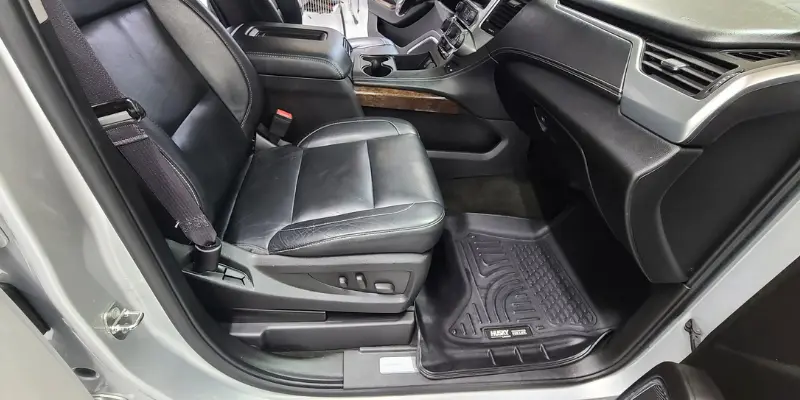
Rubber and carpet mats protect your floor, but they also trap moisture underneath them.
We routinely lift mats in early spring and find:
- Damp carpet padding
- Sand embedded in fibers
- Organic debris stuck in seams
- Slight mildew odor starting
You might vacuum the surface and think it’s clean. But if moisture sat under that mat for weeks, the padding underneath absorbed it.
That’s where spring odors begin.
Why Rural Missouri Driving Makes It Worse
If you drive gravel roads or park near open fields around Franklin County, you’re bringing more organic material into the cabin than you realize.
Winter gravel dust mixes with:
- Meltwater
- Mud
- Agricultural debris
- Early spring pollen
That material settles into carpet and seat seams. Once temperatures rise, it starts breaking down.
You don’t need visible mold to have a smell. Slight bacterial growth is enough to create that “off” scent.
Interior Plastics Also Play a Role
As temperatures rise, interior plastics and vinyl surfaces release small amounts of oils and residue. This is normal, but when it mixes with moisture and dust, it creates a film on glass and surfaces.
That’s why in spring you may notice:
- Slight haze on the inside of your windshield
- A faint interior smell when the sun hits the dashboard
- More frequent fogging in the morning
It’s all connected to temperature swings and moisture retention.
Why Air Fresheners Don’t Fix It
Masking the smell rarely works long-term.
If moisture remains in the carpet or seat padding, covering it up with scent only mixes fragrance with bacteria.
The odor returns once the scent fades.
The source has to be addressed.
What a Proper Spring Interior Reset Looks Like
When we handle spring interior issues, we don’t just wipe down surfaces.
A proper reset includes:
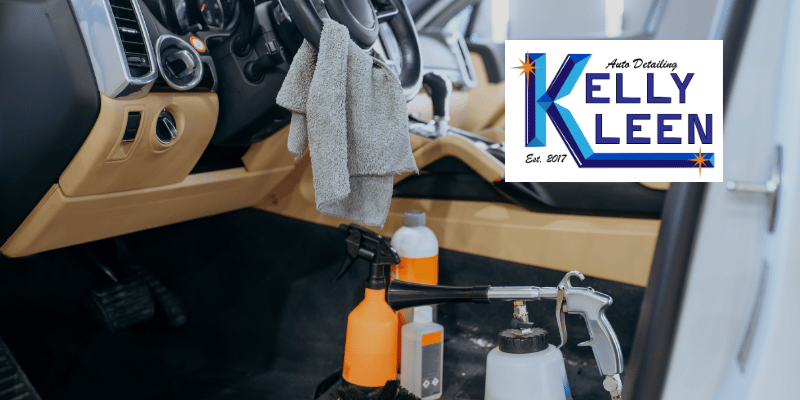
- Removing and cleaning floor mats
- Inspecting and drying the carpet underneath
- Deep vacuuming seams and tight areas
- Extracting moisture from carpets if needed
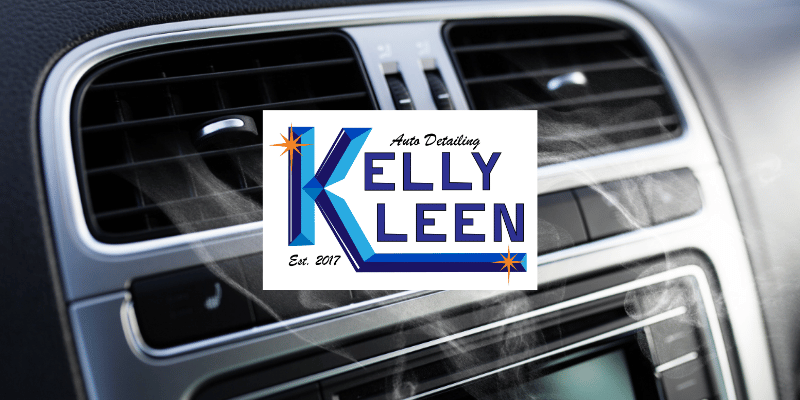
- Cleaning vents and HVAC pathways
- Replacing the cabin air filter
- Treating odor at the source if present
If the vehicle sat damp through winter, extraction makes a noticeable difference immediately.
Signs Your Vehicle Needs Spring Interior Attention
You don’t need a strong mold smell to justify service.
Common early signs include:
- A faint musty scent when the cabin warms up
- Windows fogging easily
- Air that smells different when the fan runs
- Damp feeling carpet under mats
- Slight discoloration near door sills
Catching it early prevents larger issues later in summer when humidity climbs.
Why Spring Is the Best Time to Address It
Once Missouri humidity rises in late spring and early summer, any remaining moisture becomes harder to control.
Addressing interior contamination now:
- Removes trapped winter moisture
- Reduces bacterial growth
- Improves air quality
- Makes summer driving more comfortable
- Prevents mildew from developing
It’s much easier to fix in March or April than in July.
Interior Comfort Matters More Than You Realize
You spend hours inside your vehicle every week. Air quality and cleanliness affect how it feels to drive, especially on longer trips.
If your interior smells slightly off right now, it’s not just “spring air.” It’s winter residue warming up.
A proper spring interior reset clears it out and gives you a clean starting point for the rest of the year.
Kelly Kleen handles full interior detailing, moisture extraction, and HVAC cleaning tailored to Missouri conditions so your cabin stays fresh as temperatures rise.
Schedule your spring interior detailing appointment with Kelly Kleen.