Why Black and Dark-Colored Cars Suffer More Damage in Missouri Winters

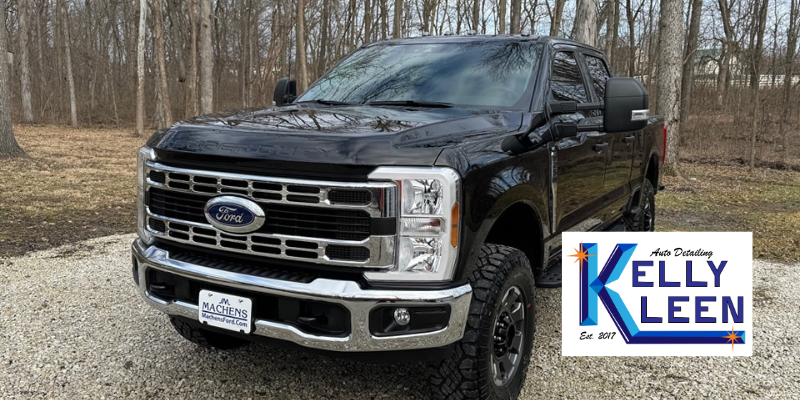
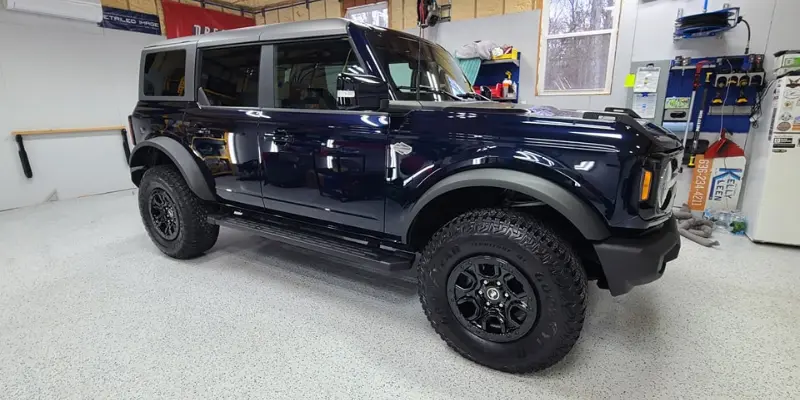
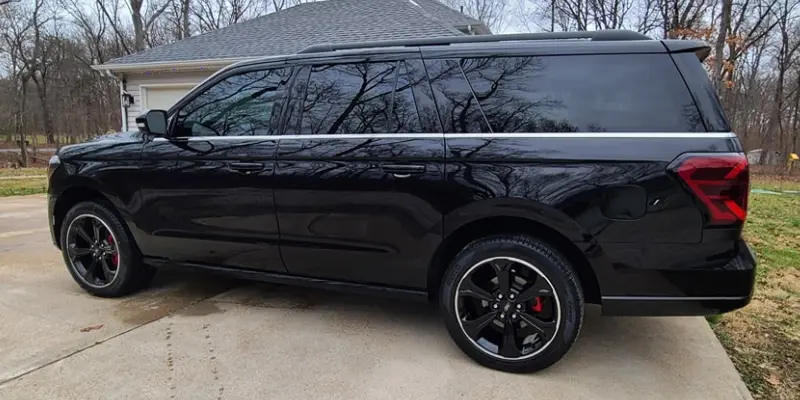
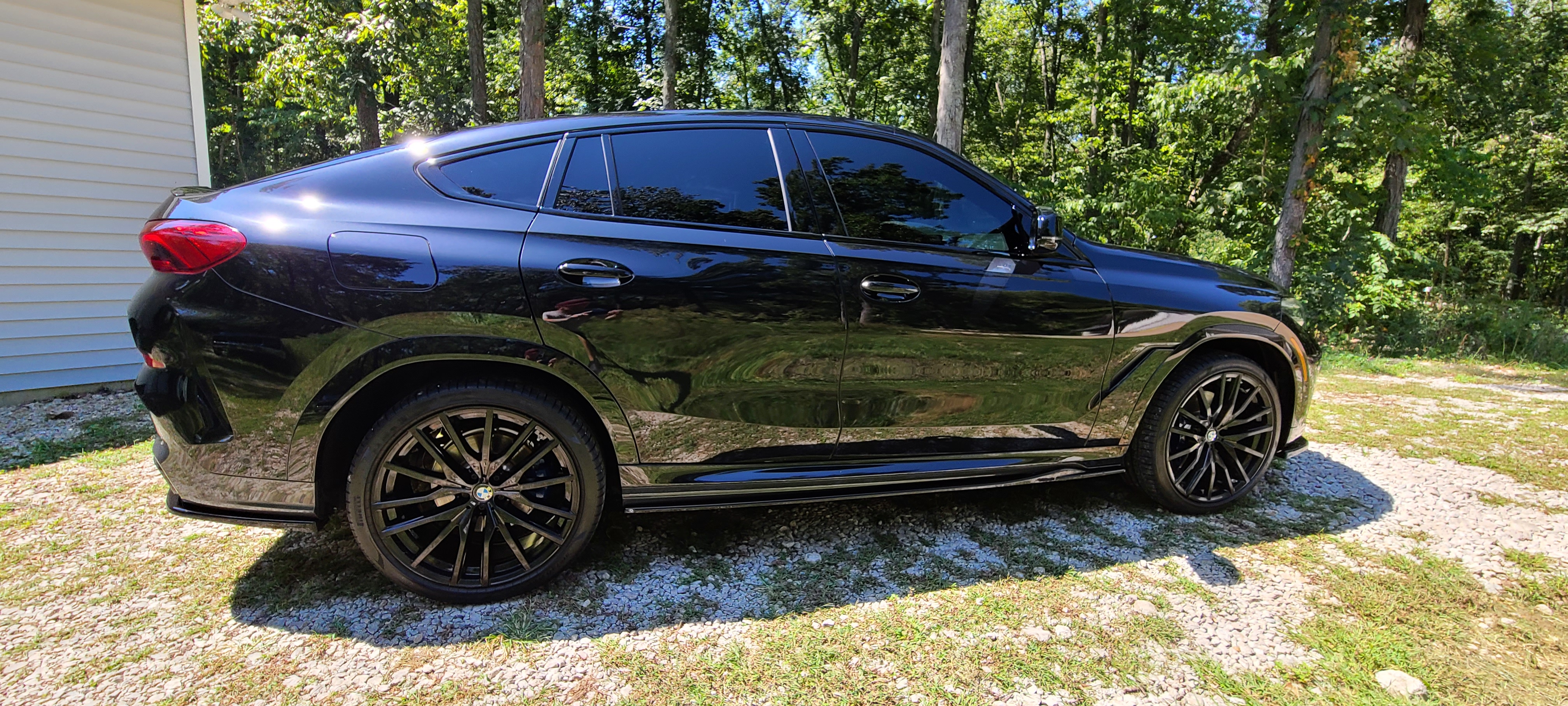
Black and dark-colored vehicles look incredible when they are clean. Deep gloss, sharp reflections, and rich color make them stand out. Unfortunately, Missouri winters are especially unforgiving to dark paint. What looks like minor winter grime on a light-colored car often becomes obvious damage on black, charcoal, and dark blue finishes.
For drivers in Washington, Union, and Pacific, winter conditions expose dark paint to more visible wear, faster breakdown of protection, and higher spring repair costs. This article explains why dark colors suffer more in winter, how Missouri weather amplifies the damage, and what drivers can do to protect their paint.
Dark Paint Shows Everything Winter Throws at It
Winter contaminants affect all vehicles, but dark paint makes damage far easier to see.
On dark colors, winter exposure highlights:
- Swirl marks from washing
- Micro-scratches from grit
- Etching from road brine
- Haze caused by contamination
- Water spots and mineral residue
- Uneven gloss loss
Light-colored vehicles experience the same damage, but it blends in. On dark paint, it is impossible to hide.
Why Missouri Road Brine Is Especially Brutal on Dark Finishes
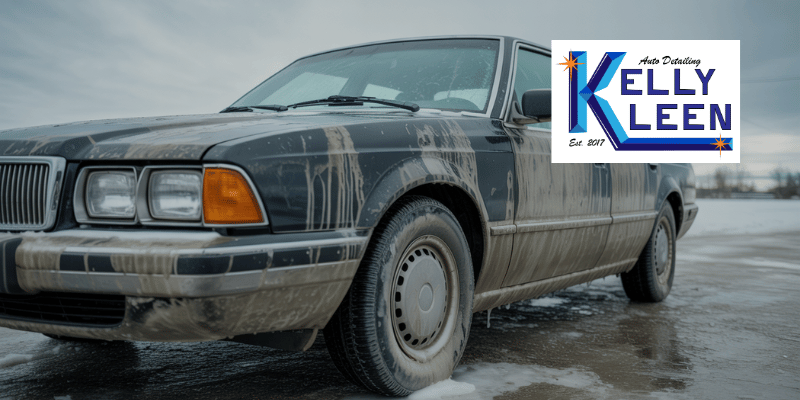
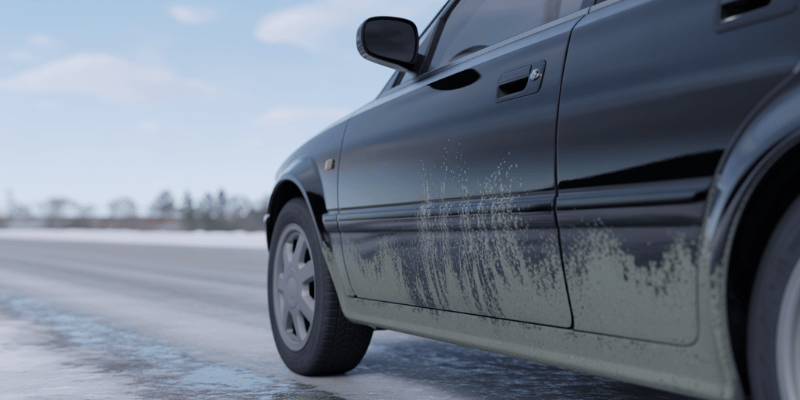
Road brine dries into a light-colored residue. On black paint, that residue stands out immediately.
Brine causes:
- Chalky streaking
- Visible spotting
- Faster breakdown of wax
- Increased surface roughness
- More aggressive spring cleanup
Because brine stays wet longer than rock salt, it spreads evenly across paint and leaves behind a visible film when it dries.
Heat Absorption Makes Dark Paint More Vulnerable
Dark colors absorb more heat, even in winter.
On sunny winter days:
- Dark paint warms faster
- Brine residue reactivates
- Moisture stays liquid longer
- Chemical reactions accelerate
This repeated warming and cooling cycle weakens protective layers faster than on light-colored vehicles.
Gravel Dust and Sand Create Visible Abrasion
Missouri winter roads rely heavily on gravel and sand. That material becomes airborne and impacts vehicles constantly.
On dark paint:
- Micro-scratches are immediately visible
- Lower panels develop hazy patches
- Rocker panels dull quickly
- Washing becomes more aggressive
Every pass of gritty wash water increases visible wear on dark finishes.
Why Winter Washing Mistakes Are More Obvious on Dark Cars
Improper winter washing affects all vehicles, but dark paint reveals mistakes instantly.
Common winter washing issues include:
- Using dirty brushes
- Washing without pre-rinsing
- Aggressive contact on cold paint
- Inadequate rinsing
- Drying with contaminated towels
On black and dark-colored cars, these mistakes show up as swirls and streaks that remain long after winter ends.
Dark Paint Loses Gloss Faster in Winter
Gloss depends on a smooth, uniform surface. Winter contamination disrupts that surface quickly.
When dark paint is exposed to:
- Brine residue
- Mineral deposits
- Grit buildup
- Repeated moisture
The finish develops microscopic texture that scatters light. This causes the paint to look dull even when clean.
Lower Panels Are the First to Suffer
Dark vehicles show winter damage earliest on lower sections.
Common problem areas include:
- Rocker panels
- Lower doors
- Rear bumpers
- Front bumper corners
- Wheel arch edges
These areas absorb constant slush spray and grit, making protection especially important.
Why Dark Paint Requires Better Winter Protection
Because damage is more visible, dark paint benefits more from protective layers.
Paint protection helps by:
- Creating a sacrificial barrier
- Reducing brine bonding
- Making rinsing more effective
- Limiting micro-scratches
- Preserving gloss
Without protection, dark paint deteriorates faster in winter conditions.
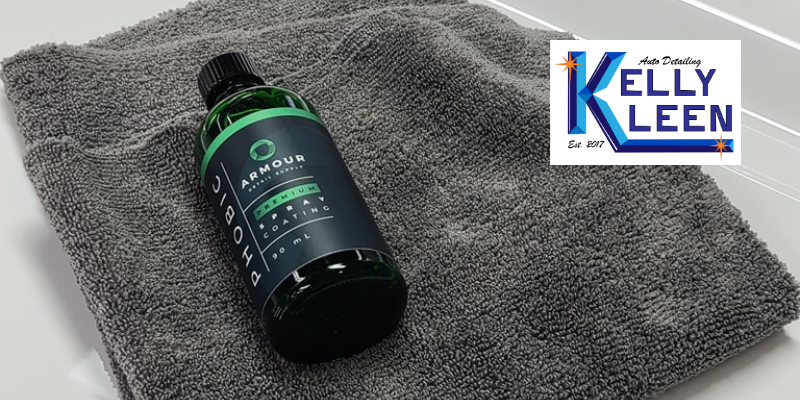
Ceramic Coatings Help Dark Paint Survive Winter
Ceramic coatings are especially beneficial for dark vehicles in Missouri winters.
Benefits include:
- Strong hydrophobic behavior
- Reduced brine adhesion
- Easier cleaning
- Less aggressive washing
- Better gloss retention
While coatings are not permanent, they significantly reduce winter wear when properly maintained.
Why Spring Correction Costs More on Dark Vehicles
Winter damage on dark paint often requires paint correction to restore appearance.
Spring correction involves:
- Polishing out swirls
- Removing haze
- Restoring gloss
- Leveling etched areas
Dark vehicles usually require more polishing than light-colored ones because defects are more noticeable.
How Professional Detailing Protects Dark Paint in Winter
Kelly Kleen takes extra care with dark finishes.
A winter-focused approach includes:
- Gentle pre-rinsing
- Thorough decontamination
- Careful contact washing
- Protective layer application
- Targeted lower-panel protection
- Regular maintenance recommendations
This reduces visible damage and preserves the appearance of dark paint.
How Often Dark-Colored Vehicles Need Winter Care
Dark vehicles benefit from:
- More frequent winter washes
- Regular removal of brine
- Inspection of protective layers
- Avoiding aggressive DIY washing
Consistent care prevents defects from compounding.
Missouri Drivers With Dark Cars Face Higher Winter Risk
If you drive a black or dark-colored vehicle and:
- Park outside
- Commute daily
- Drive rural or gravel roads
- Travel highways often
Winter protection is even more critical.
Protecting Dark Paint Is Easier Than Fixing It
Restoring damaged dark paint takes time, money, and material removal. Preventing damage costs far less and preserves your clear coat.
Missouri winters will always be harsh, but dark paint does not have to suffer permanent damage.
If you want your black or dark-colored vehicle to survive winter with its gloss intact, Kelly Kleen offers paint protection and winter detailing services designed specifically for Missouri conditions.